
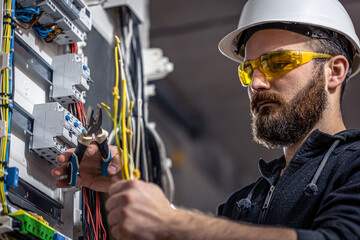
Whether you work for a company that uses full-time electricians or as an independent contractor, you must possess the right skills to perform your job. Some of these qualifications include a high school diploma, physical strength, and excellent customer service.
You can complete a vocational program at an electrical trade school or participate in an apprenticeship to become a licensed electrician. This training typically lasts about four years, and you earn a salary throughout the process. For professional help, contact Electrician Delray Beach now!
Two types of formal education can help you become an electrician: attending a trade school or completing an apprenticeship. Both offer a combination of theory instructions and intensive hands-on practical work, which prepares you for most electricians’ job profiles.
Most apprentices participate in a four or five-year program that includes classroom instruction and on-the-job training. The training teaches you about electrical theory, on-the-job safety and reading blueprints. Some programs also let you earn a salary while you are an apprentice.
If you want to become an electrician, you should have at least a high school diploma or equivalent and the physical stamina for manual labor. You will need to be able to work on your feet for long periods of time and use hand tools, including screwdrivers, wire strippers and drills. It’s important to have good vision and excellent dexterity, as well as strong mathematical and scientific skills.
You can find electricians jobs at construction sites, power companies and private businesses. Some electricians specialize in a specific area, such as installing and repairing electrical systems for large commercial buildings. Others focus on residential wiring. Still, others may specialize in power generating stations or substations. These electricians often perform inspections and testing to ensure that the equipment is working correctly.
Many states and cities have their own licensing process for electricians. For example, in New York City, you must complete a four or five-year apprenticeship and pass an exam to become a journeyman electrician. You must then spend another two years as a journeyman before you can test for master electrician status.
Some trade schools provide specialized programs that prepare students for a specific type of electricians job. For example, you can enroll in a program to become an industrial electrician or an audio/visual technician. These programs are usually more expensive than traditional trade school programs, but they can reduce the amount of time it takes you to become a licensed electrician.
You can also get on-the-job experience by working as a laborer or electrician’s assistant. This can help you build the necessary skills to advance in your career and qualify for a more advanced position. It’s also a great way to learn more about the different types of electrical work that are available.
Experience
The experience an electrician has gained through training and work is an important part of their qualifications. This experience is necessary to show a potential employer that they have the skills needed to work on electrical systems and devices of different types. It also shows that an applicant understands the basics of safety in the workplace.
Having the right amount of experience will also help an electrician determine whether or not they enjoy this type of work. If they do not, it might be time to consider a change in career. This is particularly true if an electrician has been working on residential or commercial electrical work for years and does not enjoy it anymore.
Another thing to consider when assessing an electrician’s experience is the type of projects they have worked on. For example, some electricians will only be interested in completing residential electrical repair work, while others might prefer working on industrial projects.
If a person has extensive experience in one area, it might be best to highlight this on their resume. This will give a potential employer or recruiter a better sense of an applicant’s skill level and how they might fit into the team.
Electricians often work as part of a larger construction team, so having good communication and customer service skills is essential. Having strong analytical and problem-solving skills is also beneficial because when electrical products or systems malfunction, it’s up to the electrician to think of logical solutions quickly.
In addition to these skills, electricians should have physical stamina and strength because they often have to work in cramped spaces and on ladders. They must also have keen eyesight and excellent hand-eye coordination to be able to work with the various tools and components they use on their job site.
Those who wish to become electricians can get the proper education and training through trade school courses, college classes, or apprenticeship programs. They can also gain on-the-job experience by assisting master electricians or by working for electrical contracting companies. In some cases, experienced electricians can even start their own electrical services businesses.
Licensing
In some areas, a professional license is required for electricians. These vary from state to state, so check with your local government for specific guidelines. In general, these are intended to ensure that the electrician is qualified and can perform their job in compliance with local safety regulations. For example, some states require that a journeyman have a specific number of years of work experience before they can get their license, while others require additional coursework and/or supervised apprenticeship hours.
Apprenticeship programs provide on-the-job training that helps you learn the basics of the trade and develop the skills to work safely. In addition, you’ll gain an understanding of electrical standards and practices that are important for success in the field. Some apprenticeships are specialized, meaning they focus on particular areas of the industry like residential wiring or industrial electrical work.
After you finish an apprenticeship program, you can start working as a journeyman electrician. Journeymen have more freedom than apprentices but must still work under the supervision of a master electrician. If you want to become a master electrician, you’ll need more work experience and must pass an exam.
To obtain a limited commercial and industrial license, you need to have 8,000 hours of experience and pass an exam. You must also have completed an approved apprenticeship program or have 288 hours of classroom training and 4,000 hours of work experience.
A limited residential electrician license requires completion of an approved apprenticeship program or having 288 hours of classroom training along with 4,000 hours of work experience. You must also have a limited specialty license, which requires 3 years of experience in a specific area of the field (like pools or HVAC systems) and proof of General Liability insurance.
The process of becoming an electrician takes time, but it’s well worth the investment. Many employers across the country are struggling to find hourly craft positions like this, so you can expect plenty of job opportunities once you’re licensed and certified. Plus, you’ll be working in one of the most respected and highest paying skilled trades in the world.
Certification
To become an electrician, you must complete a number of requirements. These include completing a trade school program and passing an exam. Most programs last two to three years, and they typically combine classroom study with apprenticeships. Coursework includes classes in electrical theory, wiring, motor controls, and mathematics. It is important to choose a program that is accredited by the state.
You must also pass an aptitude test. This includes questions on math, english, and other subjects. These tests are designed to help you get a feel for the job, as well as determine if you have the necessary skills to work in the field. If you don’t score well on the aptitude test, it can be difficult to become a certified electrician.
Electricians must also complete a practical exam and pass a written exam to become licensed. A practical exam involves testing your ability to install and repair various types of electrical systems. The written exam consists of multiple-choice questions and requires you to write detailed answers. It is also required that you wear proper safety gear and observe all safety protocols while working on a project.
The state of New York also requires that you obtain liability insurance and workers’ compensation insurance. It’s essential to have these policies because the job is dangerous. You can find more information about getting insured as an electrician by contacting the Department of Labor.
There are many benefits of becoming a certified electrician, including increased career opportunities and higher pay. Additionally, there are special certifications that can help you break into specific industries, such as green and renewable energy.
There are also online resources that can help you prepare for the licensing exam. These websites offer practice journeyman and master electrician exams, as well as tips for preparing for the exam. Some of these sites require a subscription, while others are free to use.
